VIVAWORKS
Vivagas - Talent Pool
OVERVIEW
The Active Sourcing Challenge
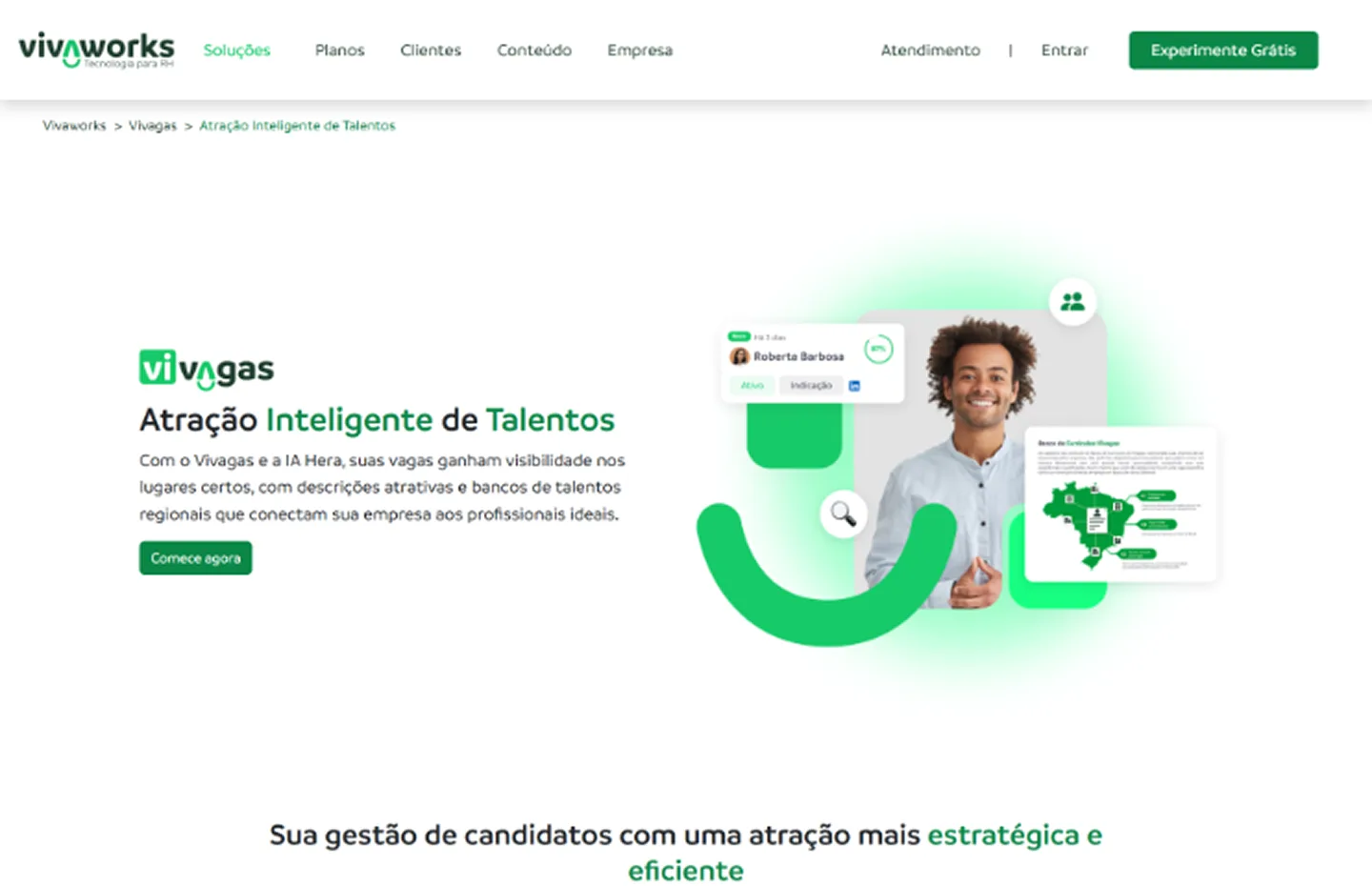
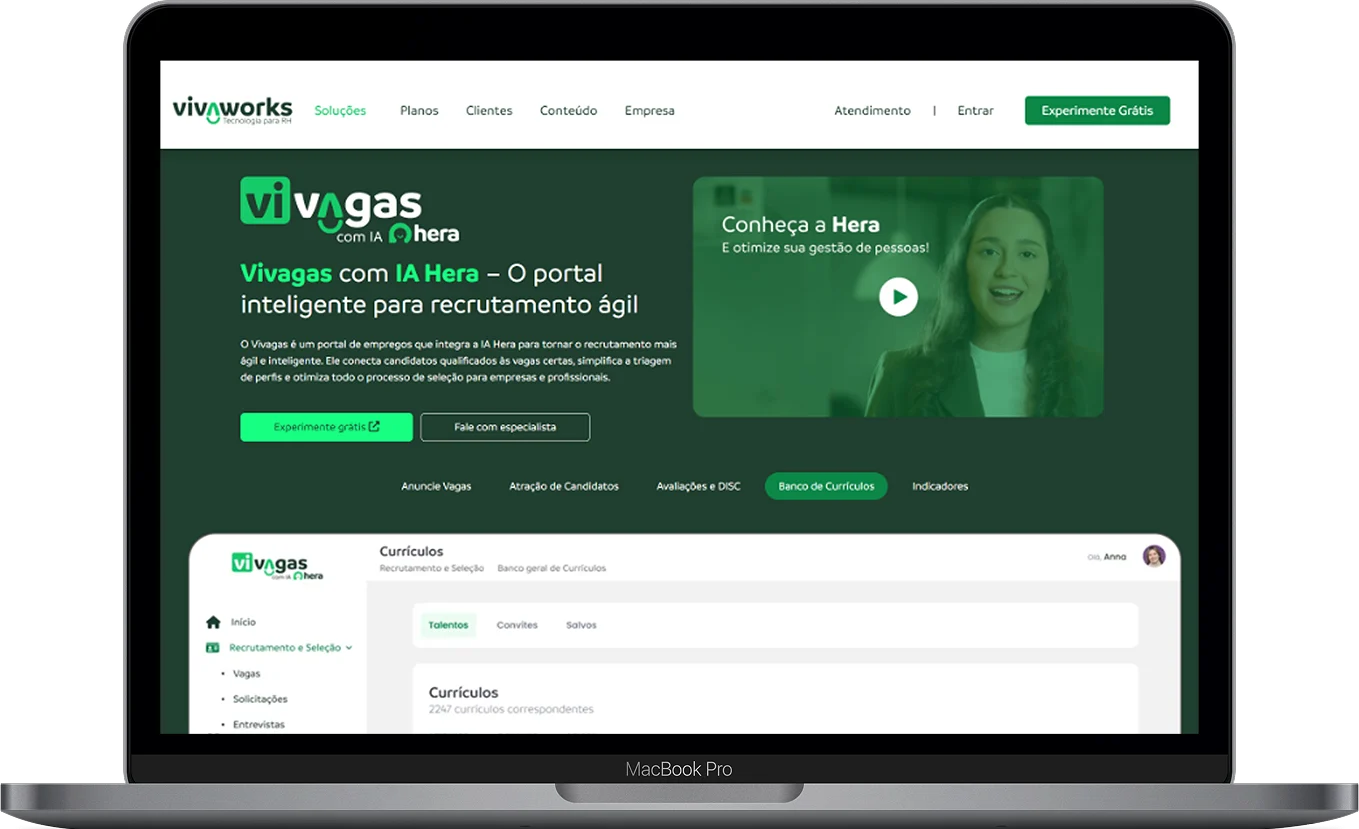
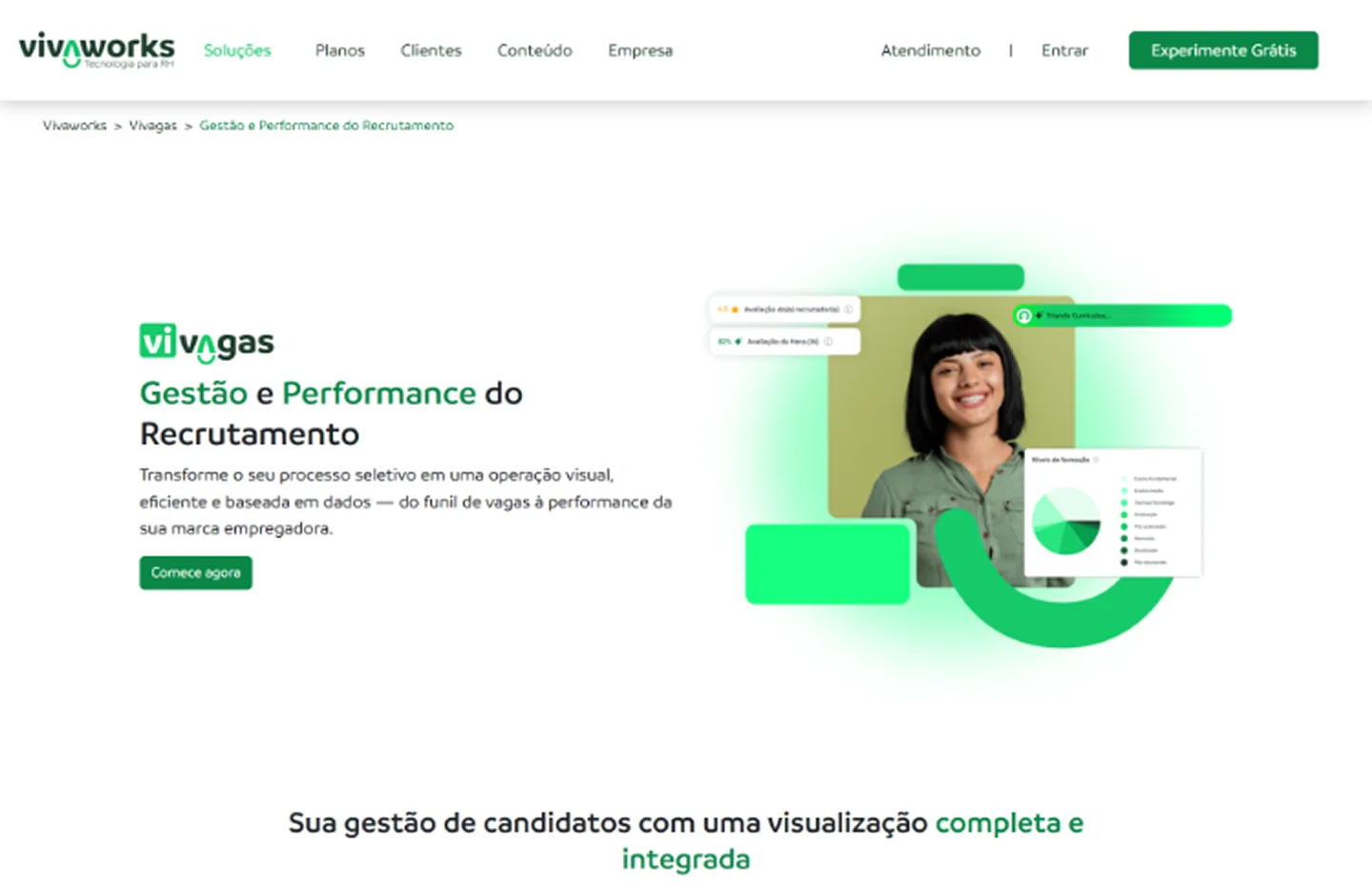
Vivagas is a regional job board that needed to evolve its value proposition for partner companies. The challenge was to transform a traditionally passive platform into an active recruitment ecosystem. By designing a robust talent pool from scratch, the system empowered recruiters to actively source, filter, and connect with candidates, drastically reducing time-to-hire.
My Role
Operating as the Solo UX/UI Designer for this initiative, responsibilities focused on the end-to-end cycle of this specific feature. The scope covered UX Research, conceptual ideation, information architecture, and the final high-fidelity UI design, ensuring the new talent pool component integrated seamlessly into the broader Vivagas ecosystem.
RESEARCH
Uncovering Recruiter Pain Points
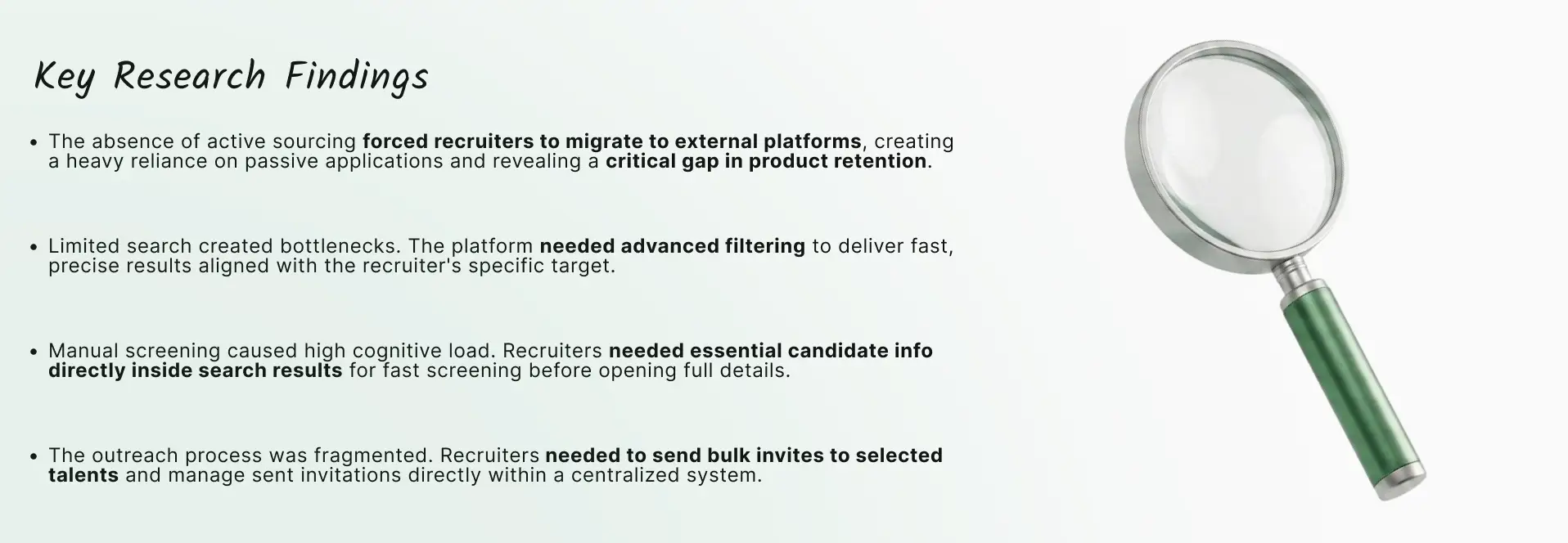
To properly address the platform's limitations, I conducted qualitative interviews with internal stakeholders and partner recruiters from the Vivagas ecosystem. This research focused directly on understanding their specific needs and operational bottlenecks regarding the lack of active recruitment within the platform, mapping out how the absence of a sourcing tool impacted their efficiency in filling roles.
RESEARCH
Competitor Analysis
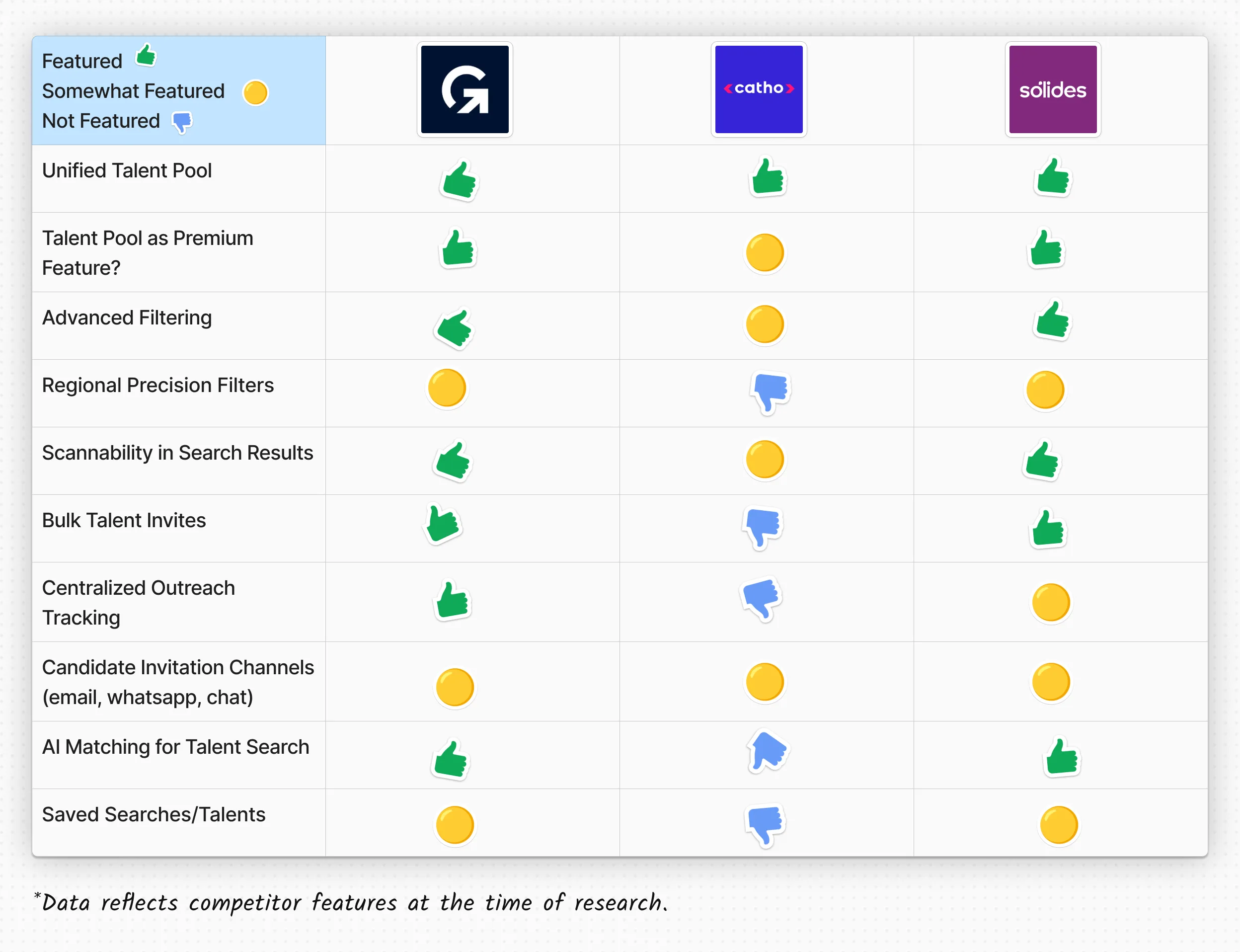
To understand how the market approaches active sourcing mechanics, I conducted a detailed benchmark across leading Brazilian HR Tech platforms: Gupy, Catho, and Sólides. This mapping identified established design patterns and recruiter expectations, focusing on three main pillars to ensure immediate product familiarity:
Search & Filtering Logic: Assessing how platforms categorize candidate data and structure advanced filters to speed up the sourcing process.
Profile Findability: Observing industry standards for layout hierarchy, ensuring key candidate information is scannable at a first glance.
Action Flow Efficiency: Mapping out how recruiters select, save, and contact potential talent with the fewest interactions possible.
IDEATION
Designing The Solution
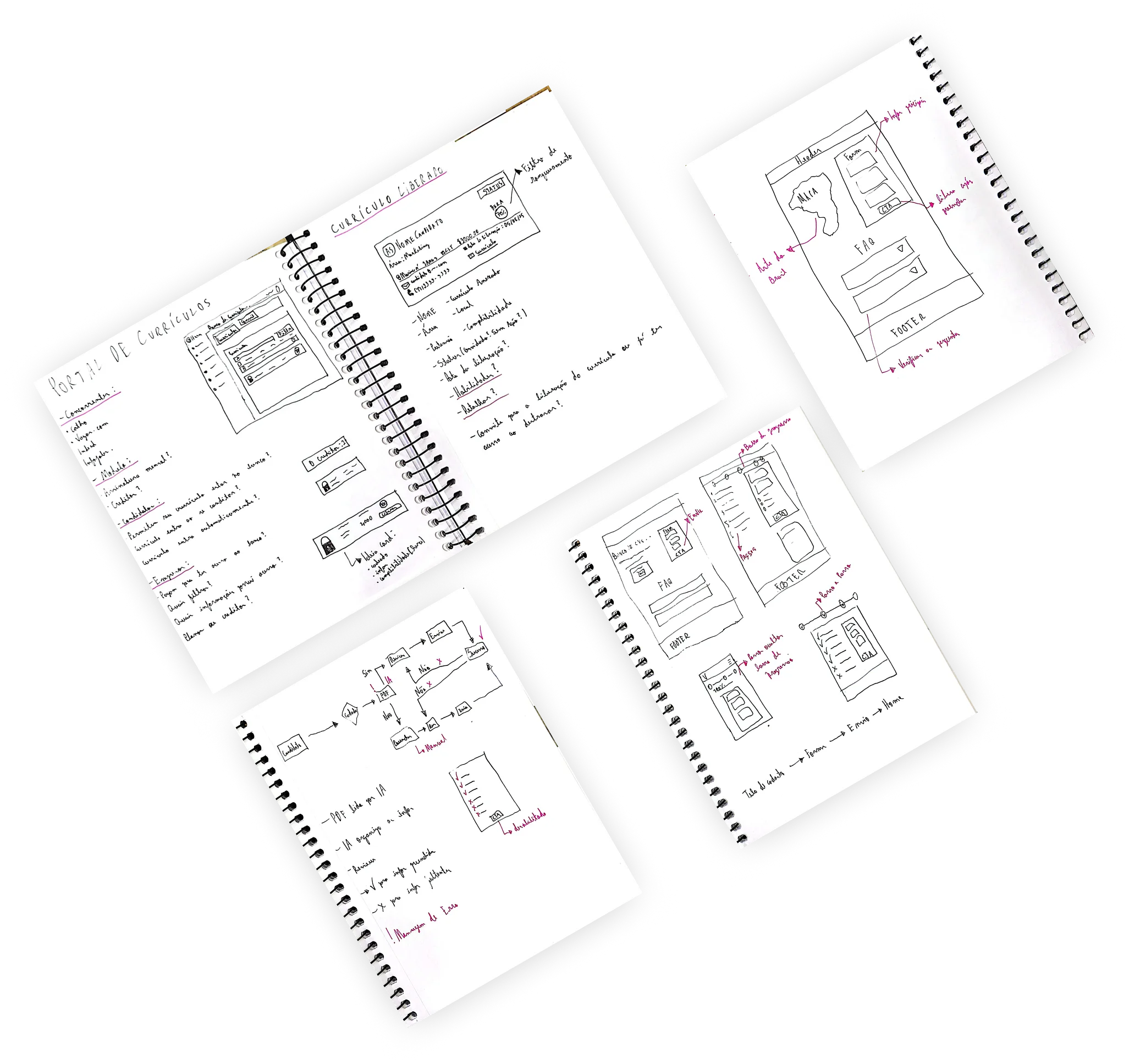
To ensure rapid alignment, I developed and presented low-fidelity wireframes to the product team for validation before moving into high-fidelity. This collaborative step allowed the team to test layout concepts and technical feasibility early in the process.
The interface architecture strictly followed established design patterns from other Vivagas modules, specifically leveraging structures from the internal talent pool and the candidate dashboard. Utilizing these existing components significantly accelerated development since the core candidate layout remained consistent, reducing the learning curve for recruiters.
IDEATION
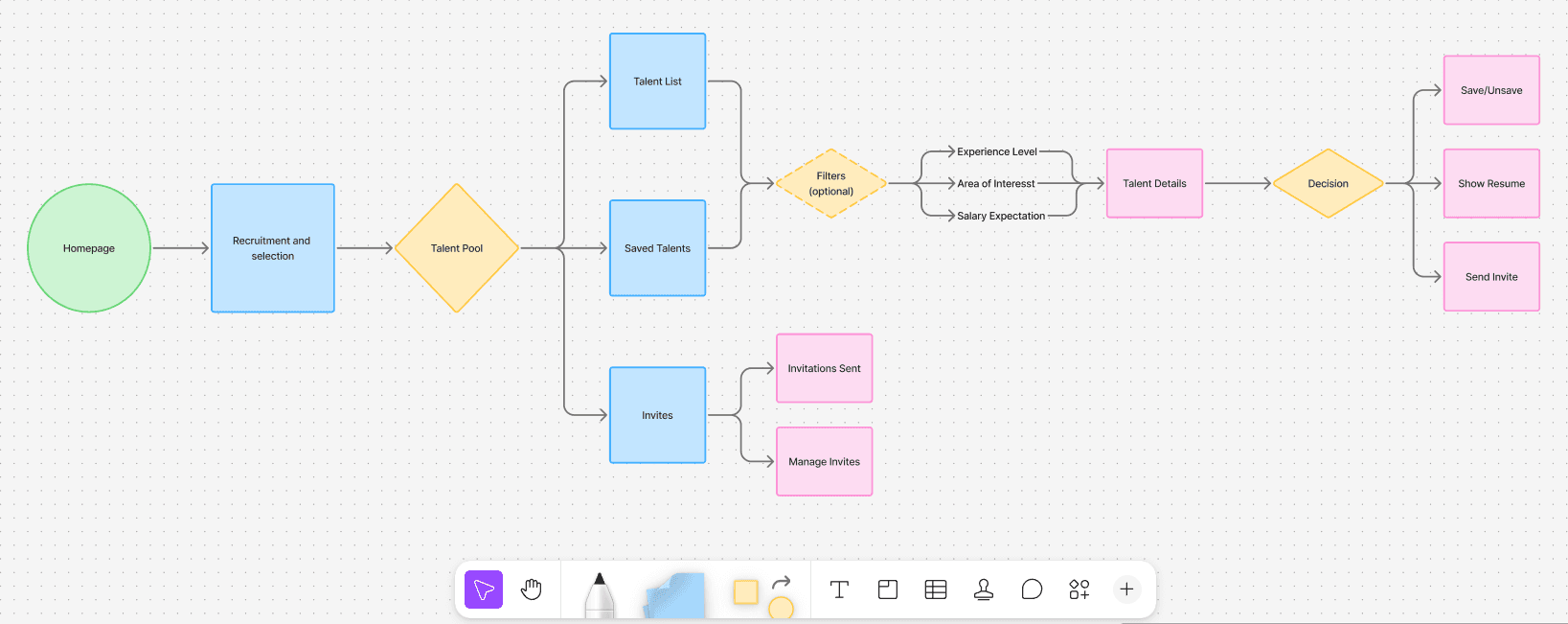
User Flow
IDEATION
Final Designs
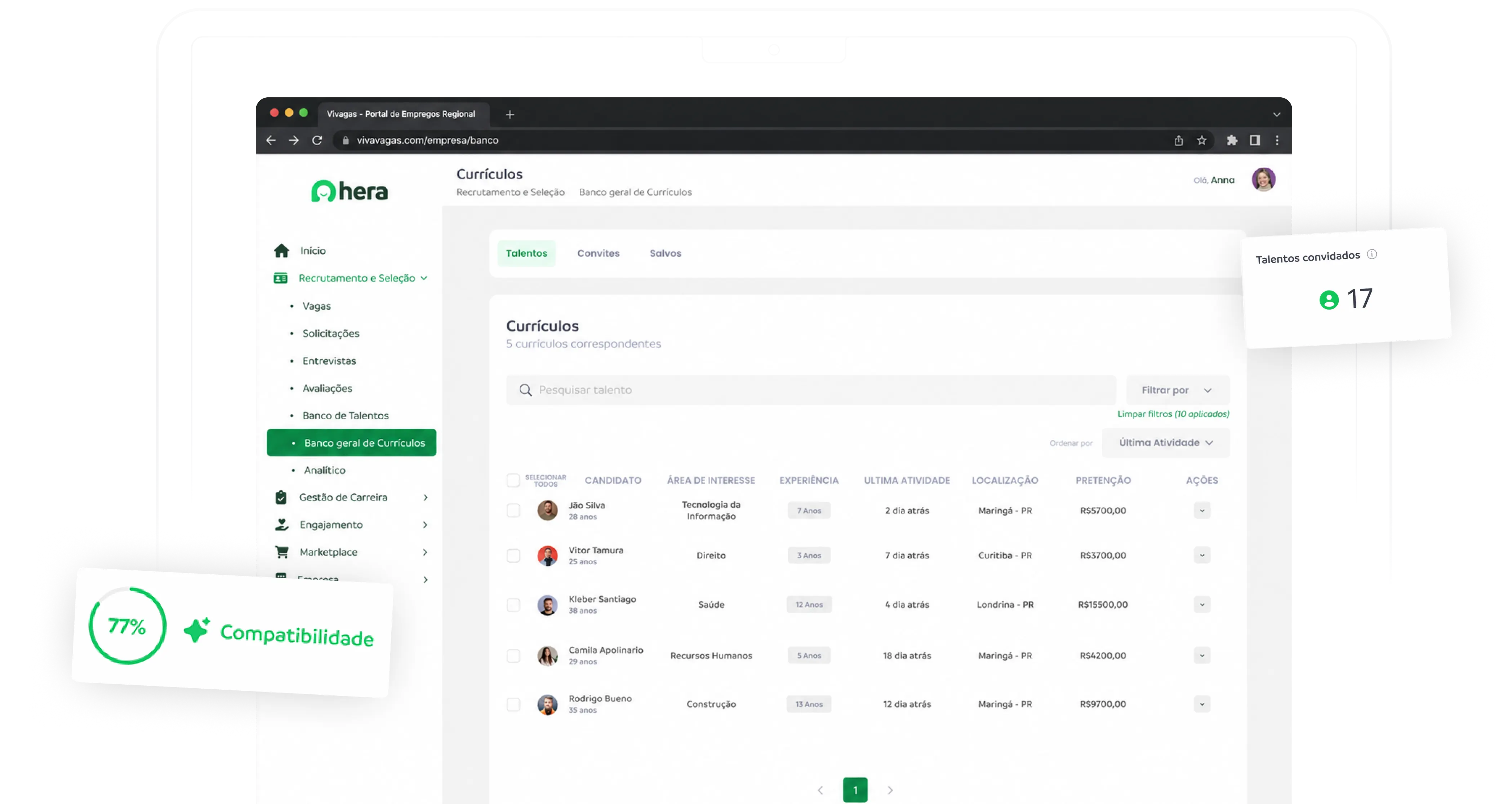
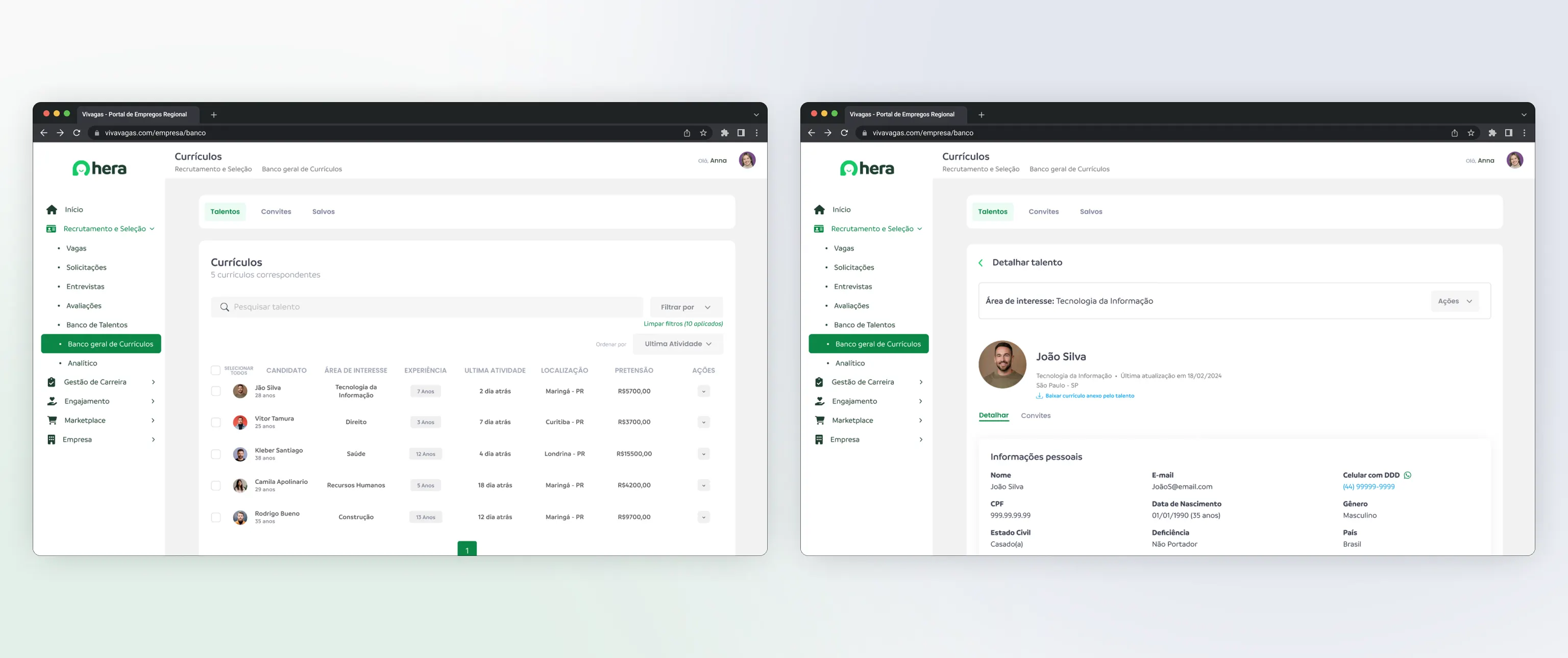
Crafted in close collaboration with developers, the high-fidelity interface uses the existing Vivagas design system to ensure absolute technical consistency. To mitigate friction, key interaction flows were continuously validated through usability testing during prototyping. The final layout balances high data density with clean scannability, specifically tailored to accelerate intense HR routines.
Precision Sourcing & Evaluation
This centralized workflow transforms the Talent Pool into a high-performance sourcing engine, driving recruiters from discovery to direct engagement instantly.
• Strategic Filtering: Apply hyper-granular filters to align search results with precise technical and regional needs.
• Deep Profile Assessment: View comprehensive talent breakdowns and download attached CVs directly within the platform.
• Multi-Channel Outreach: Initiate direct invitations through integrated channels, accelerating the hiring funnel.
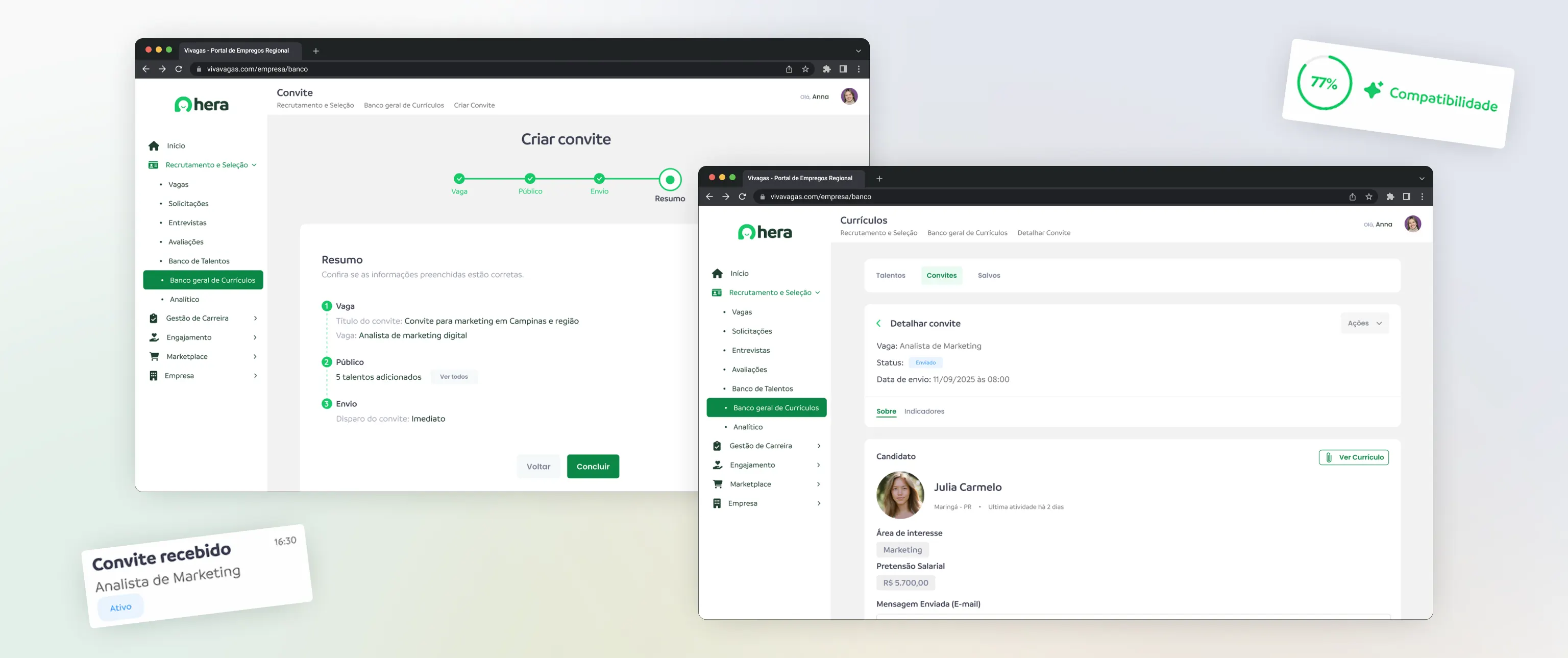
Bulk Invitation & Status Tracking
To eliminate manual bottlenecks, I designed an integrated bulk invitation experience. I focused on creating a frictionless form layout paired with an intuitive status grid below, allowing recruiters to dispatch messages and monitor candidate opt-ins at a glance.
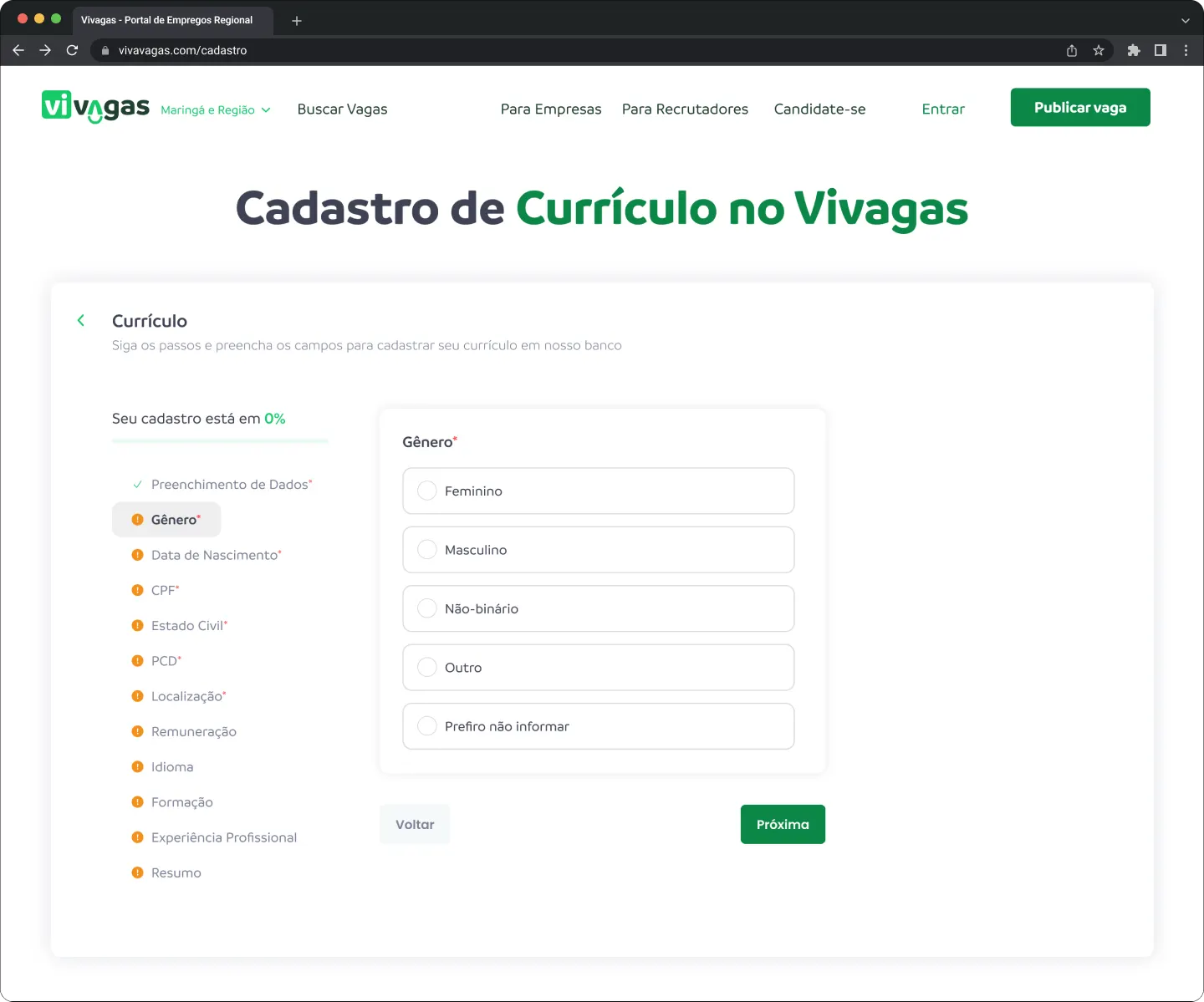
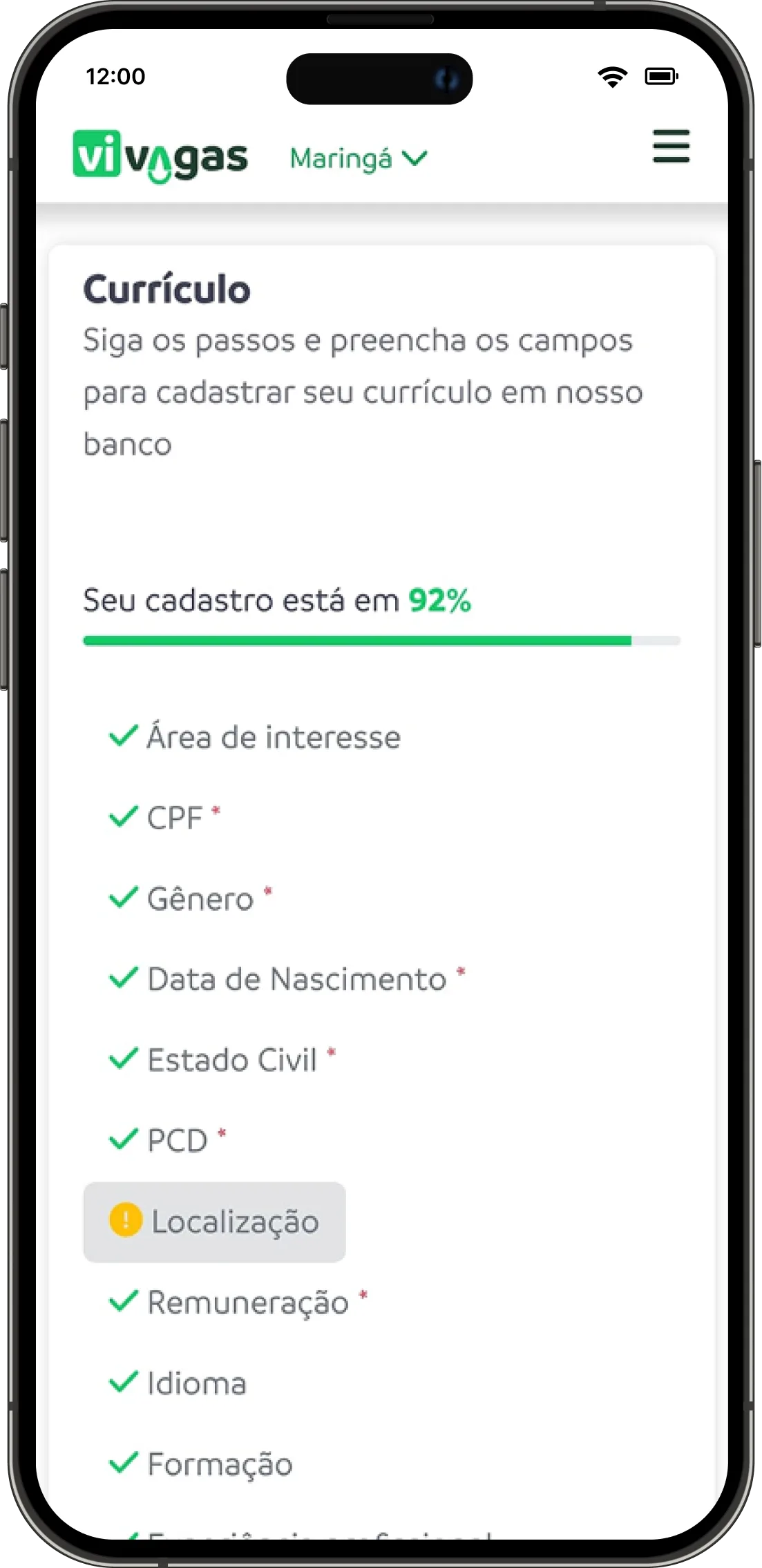
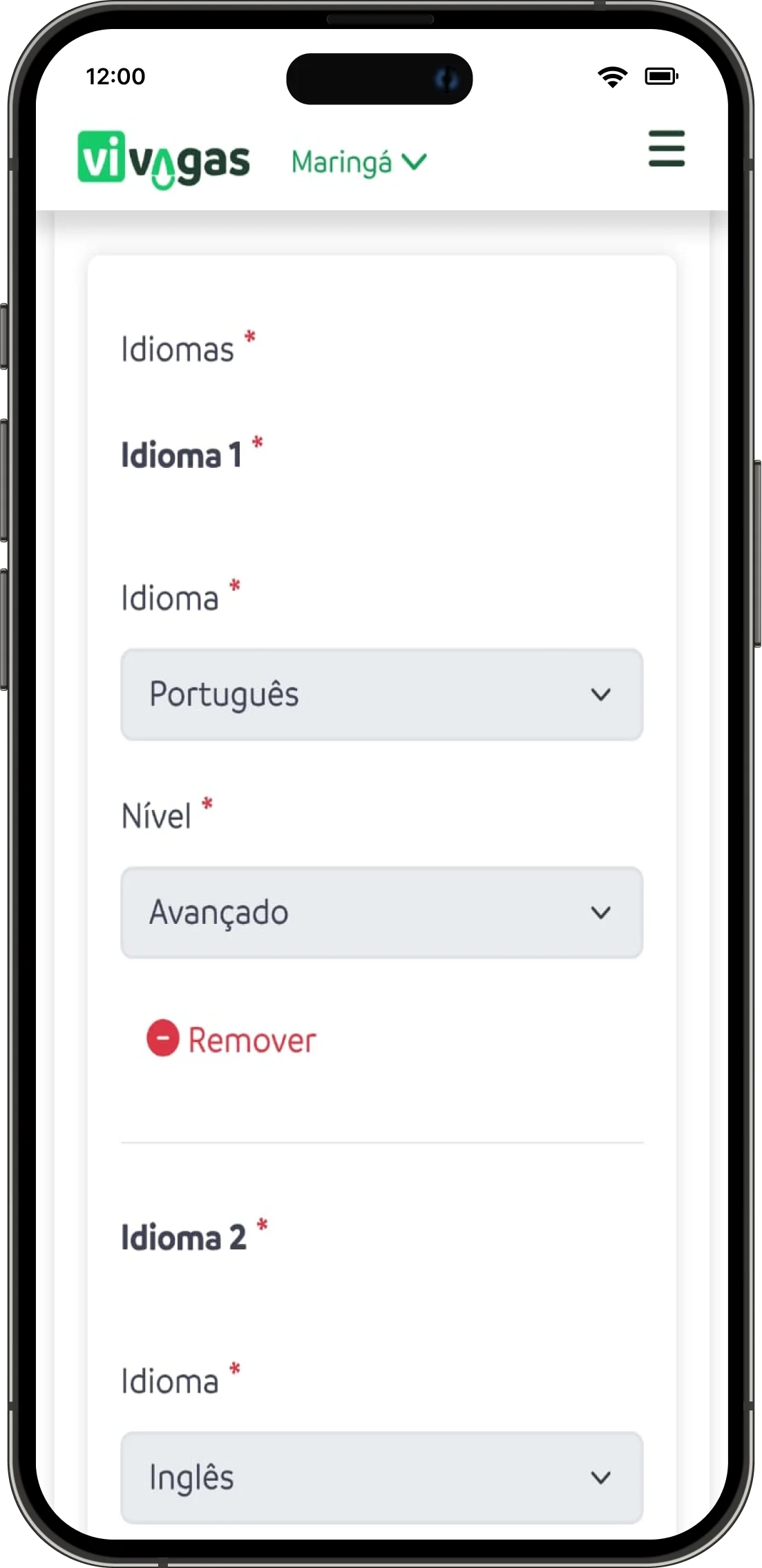
The Talent Experince
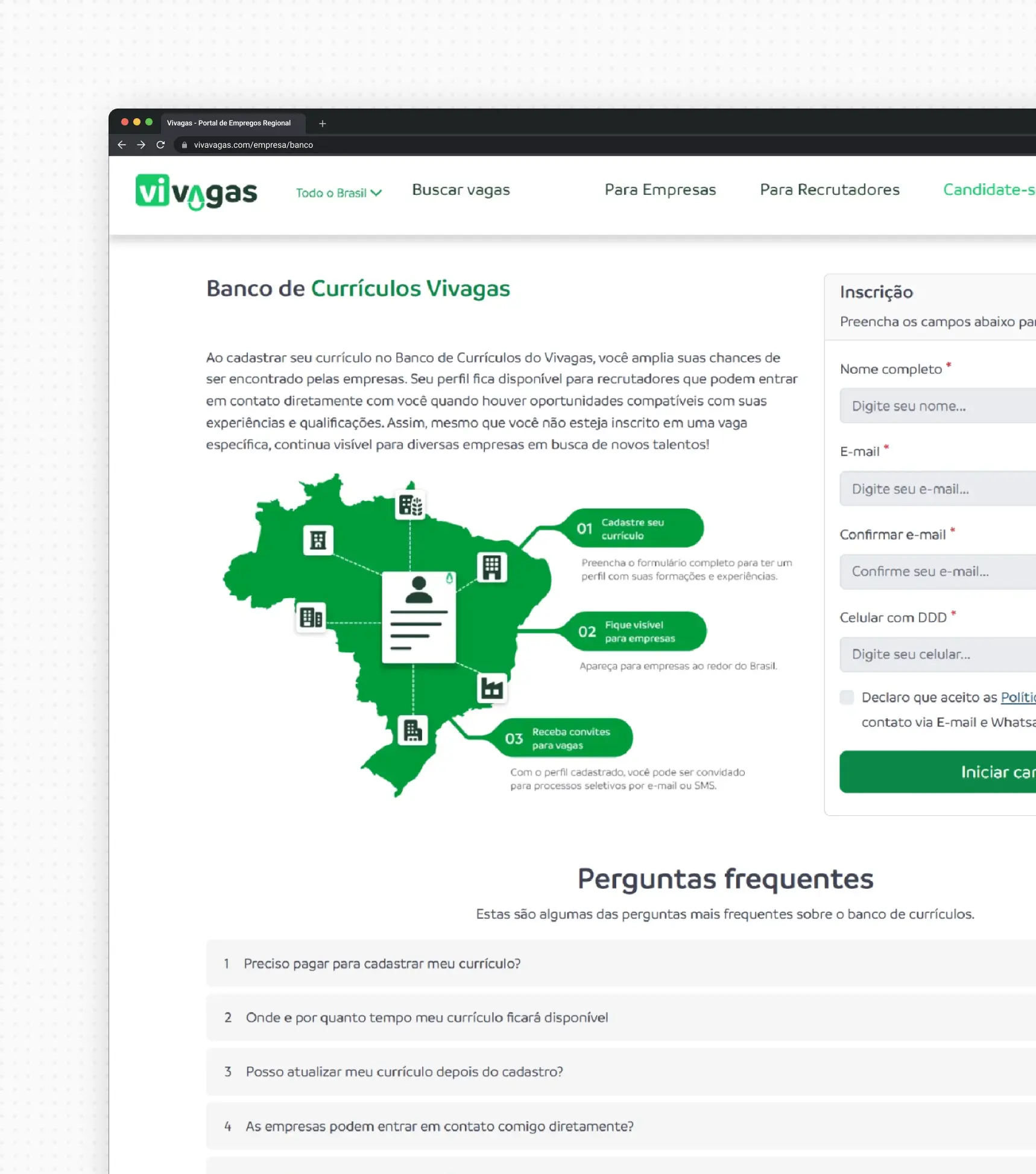
To ensure a continuous profile flow, I built transparency and autonomy for candidates. Beyond standard applications, talents can actively register into the general database, update their resumes at any time, or request account deletion, establishing a trust-based and compliant relationship.

OUTCOMES
Outcomes & Impact
✔ Active Sourcing Engine: Successfully transformed a passive job board into a high-performance, active talent acquisition engine.
✔ Rapid Database Growth: Reached over 8,000 registered talents within the very first week of launching the feature.
✔ Accelerated Time-to-Hire: Significantly reduced time-to-close open positions by enabling efficient, proactive recruiter sourcing.
✔ Streamlined Outreach: Replaced manual invite bottlenecks with an efficient bulk outreach workflow, lowering recruiter cognitive load.
✔ Frictionless Candidate UX: Created an intuitive, seamless application flow that drives high engagement and profile completion.
FINAL THOUGHTS
Key Takeaways & Learnings
This project reinforced the critical role of market research and user interviews in defining a strategic product direction. One of my biggest takeaways was deeply understanding the unique, high-pressure workflows of recruiters, which allowed me to shift my perspective and design an interface that genuinely simplifies their intense daily routines. Ultimately, transforming a passive board into an active ecosystem taught me how to deliver high-impact scalability while respecting the constraints and consistency of an existing design system.
Thanks for Reading!
Check out more projects below, or feel free to reach out to learn more about my process.